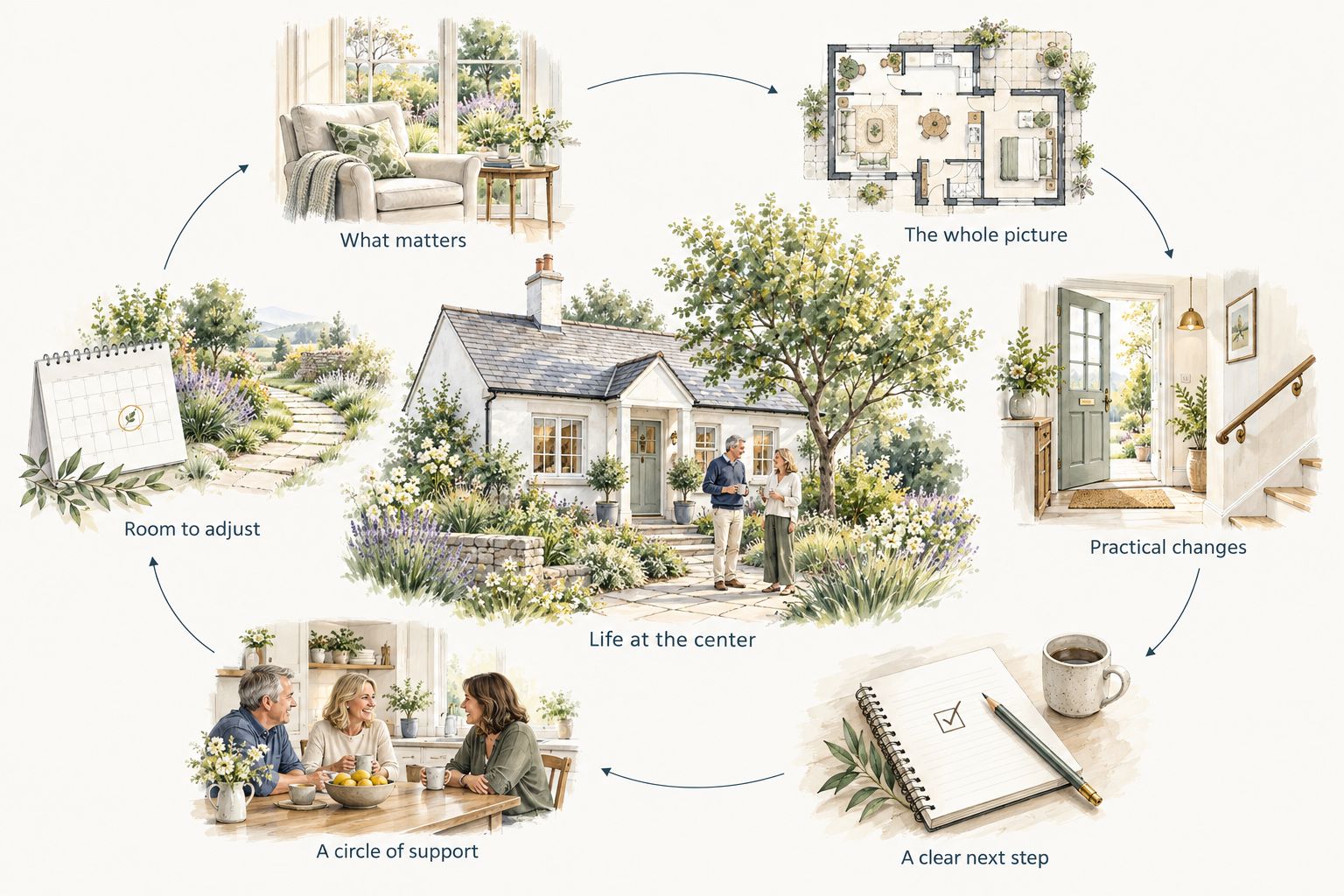
Our approach begins with understanding everyday life: what matters to you, what is working and what has become harder. From there, we help you explore options and turn them into manageable next steps.
Begin with what matters most
Before choosing a product, changing a room or arranging a service, consider what you want daily life to look like.
Perhaps it is continuing to cook, keeping a garden, seeing friends or having privacy. Perhaps the immediate priority is making it through the week with enough help.
Those priorities give the planning a purpose. They help you judge whether a proposed change will make life better in a way that matters to you.
Look at the whole picture
A home can be physically accessible and still feel isolating. Family may live nearby but have limited time to help. A useful service may be available but difficult to afford over the long term.
We look across the connected parts of staying home: the house, daily activities, transportation, care, money, social connection and caregiver capacity.
Considering them together helps reveal where one change could make several things easier—and where a plan depends too heavily on one person or assumption.
Explore practical changes
Often, a useful first step is modest: improving lighting, moving frequently used items within reach, arranging a regular ride or asking someone to share a recurring task.
Larger changes may also deserve consideration, including home modifications, paid care or a different living arrangement. We help explain what each option involves, including its demands, limitations and questions worth asking.
The scale of the response should fit the need. Some concerns call for prompt professional attention; others can be addressed gradually.
Turn information into action
Reading can help you understand a concern. Planning means deciding what to do with that understanding.
Our guides, workbooks and tools are designed to help you identify priorities, prepare for conversations and organize next steps. A useful plan makes clear what needs to happen, who will help and when to check back.
You can begin with one decision. The rest can develop as you learn more.
Build support people can sustain
Families often begin with generous intentions and informal promises. Over time, those arrangements can become difficult to maintain.
We encourage specific conversations about availability, responsibilities, costs and backup help. Support should account for what people can reliably offer, including distance, work, health and other commitments.
A wider circle of support can make everyday life more dependable and give caregivers room to rest.
Bring in expertise with better questions
Some decisions need an individual assessment, local knowledge or specialist advice.
Our resources help you prepare: understand which kind of professional may be useful, gather relevant information and identify questions to ask. That preparation can make appointments and consultations more productive.
Educational tools support those conversations. They cannot determine every household’s needs on their own.
Revisit the plan as life changes
A plan that works today may need adjustment after an illness, a change in mobility, the loss of someone close or a caregiver becoming less available.
Checking back creates an opportunity to notice what has changed and respond before the arrangement becomes harder to sustain.
You don’t have to work it all out today. Start with what matters most, take a useful step and leave room to adjust.
'/%3E%3Cg transform='translate(100 100) scale(1)' fill='none'%3E%3Cpath d='M12.7998 6H87.2002C89.4486 6 91.1052 6.00048 92.4141 6.10742C93.7169 6.2139 94.6319 6.42335 95.4053 6.81738C96.8163 7.5364 97.9636 8.68371 98.6826 10.0947C99.0767 10.8681 99.2861 11.7831 99.3926 13.0859C99.4995 14.3948 99.5 16.0514 99.5 18.2998V82.0889C99.5 84.3373 99.4995 85.9938 99.3926 87.3027C99.2861 88.6057 99.0767 89.5206 98.6826 90.2939C97.9636 91.705 96.8163 92.8522 95.4053 93.5713C94.6319 93.9653 93.7169 94.1748 92.4141 94.2812C91.1052 94.3882 89.4486 94.3887 87.2002 94.3887H12.7998C10.5514 94.3887 8.89483 94.3882 7.58594 94.2812C6.28306 94.1748 5.36806 93.9653 4.59473 93.5713C3.18369 92.8522 2.03638 91.705 1.31738 90.2939C0.923328 89.5206 0.713894 88.6057 0.607422 87.3027C0.500478 85.9938 0.5 84.3373 0.5 82.0889V18.2998C0.5 16.0514 0.500481 14.3948 0.607422 13.0859C0.713899 11.7831 0.923349 10.8681 1.31738 10.0947C2.0364 8.68371 3.18371 7.5364 4.59473 6.81738C5.36806 6.42335 6.28305 6.2139 7.58594 6.10742C8.89483 6.00048 10.5514 6 12.7998 6Z' stroke='%2304080B'/%3E%3Cpath fill='%2304080B' d='M10 53.4151V81C10 83.2091 11.7909 85 14 85H87L35.4043 33.7962C33.8447 32.2485 31.3286 32.2485 29.769 33.7962L10 53.4151Z'/%3E%3Ccircle cx='83' cy='26' r='10' fill='%2304080B'/%3E%3C/g%3E%3C/svg%3E)